Williams | Robinson | Wiggins
insights - all things legal
When a Defective Product Causes Harm in Missouri.
Design, manufacturing, and warning defects, and Missouri's innocent seller protection.
When a product turns out to be dangerous — a power tool that lacks a proper safety guard, a vehicle part that fails, a medication with an unlisted risk — Missouri law lets an injured person hold the manufacturer, and sometimes the seller, responsible without necessarily having to prove the manufacturer was careless. Missouri recognizes at least three distinct types of product defects, may allow a strict liability claim that does not require proof of negligence, and may protect an innocent retailer who is merely a link in the distribution chain. Here is an overview of how a Missouri products liability claim works.
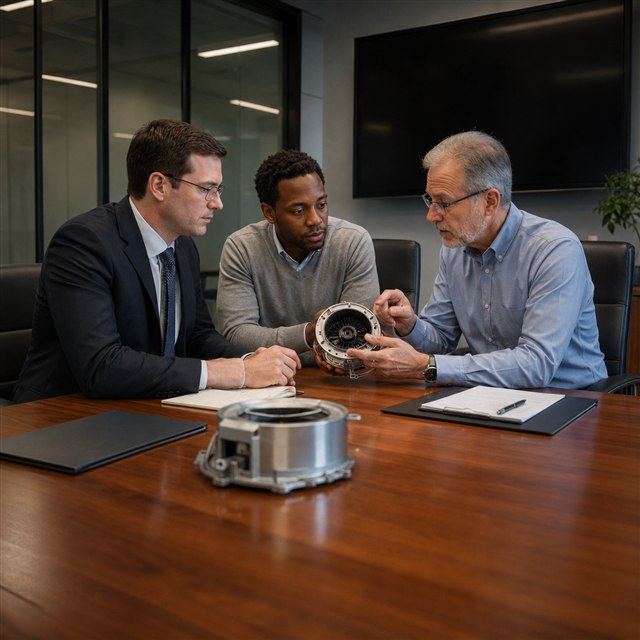
Missouri recognizes strict liability in some circumstances, so a plaintiff need not prove the manufacturer was negligent in some cases. Under § 537.760, RSMo, a person injured by a product may bring a "products liability claim" against anyone who sold the product in the course of their business, if the product was in a defective condition, unreasonably dangerous when put to a reasonably anticipated use, the product was used in a manner reasonably anticipated, and the plaintiff was damaged as a direct result of the defective condition. Plaintiff may choose to bring the claim as a strict liability claim, and if so the plaintiff generally does not need to prove the manufacturer was careless in how the product was designed or made — only that the product itself was defective and that the defect caused the injury.
Missouri recognizes three types of product defects. A design defect exists when the product's design itself makes it unreasonably dangerous, even though it was manufactured exactly as intended — a lawn mower, for example, designed without a blade guard. A manufacturing defect exists when an individual product departs from its own intended design, such as a single bottle in a batch of medication contaminated during production. A warning or marketing defect exists when a product's risks were not adequately disclosed to the user, even though the product's design and manufacture were otherwise sound. Each type requires slightly different proof, and a single product can sometimes give rise to more than one type of claim.
Keep in mind that some products remain useful but, by definition, can not be made safe and still function – an axe or firearm for example – and so such products must have adequate safety warnings.
A negligence claim may also be available, and is often pursued alongside strict liability. Separate from a strict liability claim, an injured person may also bring an ordinary negligence claim against a manufacturer or seller — for example, that the manufacturer failed to use reasonable care in testing the product before it reached the market. Negligence and strict liability claims are not mutually exclusive, and a products liability lawsuit will often plead both theories, along with a breach of warranty claim where a written or implied warranty applies.
Claims can be brought under other theories. Chapter 25 of the Missouri Approved Civil Jury Instructions sets out methods of bringing a "products liability claim" other than:
- Strict Liability – Product Defect
- Strict Liability – Failure to Warn
- Negligent Manufacture, Design, or Failure to Warn
Missouri also recognizes:
- Breach of Common Law Implied Warranty of Fitness for Purpose or Consumption
- Breach of Warranty of Fitness For a Particular Purpose Under the Uniform Commercial Code
- Breach of Express Warranty Under the Uniform Commercial Code
- Breach of Implied Warranty of Merchantability Under the Uniform Commercial Code
- Negligently Supplying a Dangerous Instrumentality
- Negligently Supplying a Dangerous Instrumentality for the Supplier's Business Purposes
Missouri law may protect an “innocent seller” whose potential products-liability liability is based solely on its status as a seller in the stream of commerce. Under § 537.762, RSMo, a defendant who is not the manufacturer — a retailer in the stream of commerce, for example — may be dismissed from a strict liability claim if it certifies (1) the correct identity of the manufacturer and (2) there is no evidence the seller was independently negligent, breached an express warranty, or made an affirmative representation about the product's safety, and if another defendant earlier in the stream of commerce or the manufacturer is properly before the Court. A dismissal under this provision is only interlocutory — not final — until the plaintiff's claim is resolved by settlement or judgment, so the court may bring the seller back into the case at any point before then if circumstances change. This provision generally focuses liability on the party that designed or made the defective product rather than the store or distributor that sold it unchanged.
The filing deadline generally follows Missouri's five-year personal injury statute of limitations. As with most other Missouri personal injury claims, an action for a products liability injury generally must be filed within five years of the date of injury under § 516.120, RSMo. Because a defective product can sometimes cause harm that is not immediately obvious — as with a slow-developing injury from prolonged exposure or use — it is worth talking to an attorney as soon as a connection between a product and an injury is suspected, rather than waiting until the deadline is close.
Missouri law does not recognize a broad statute of repose that cuts off product liability claims related to older products after a set number of years following manufacture. Missouri instead only imposes a statute of limitations after injury. Manufacturers of products theoretically face timeless exposure for products placed in the stream of commerce in Missouri, and as a result in recent years the Missouri Legislature has begun debating the question of adding a statute of repose in Missouri. The debate turns on the question of how a product, which was considered state-of-the-art and completely safe when manufactured can many years later be the subject of a negligent design claim.
What to do if a product may have caused an injury. Preserving the product itself — along with its packaging, instructions, and any remaining pieces after a failure — is one of the most important early steps, since the physical product is often the central piece of evidence in a products liability claim. Documenting how the product was used, seeking medical treatment, and checking whether the product has been subject to a recall by the manufacturer or a federal agency can all support a claim, though a claim does not require a recall to exist. It also may be important to document and prove where the product was purchased from in case the manufacturer was in a foreign country not subject to the jurisdiction of Missouri courts.
Did you know? The above information is presented by Williams | Robinson | Wiggins as a public service and to generally outline the law in a particular area. It is not provided and is not intended as legal advice tailored to you or to your unique situation. Every legal matter depends upon specific facts which an attorney hired by you must consider in forming legal opinions and advice.
Need more information? If you believe you have been injured by a defective product, you may contact us at(573) 341-2266 to obtain more detailed assistance.

Joseph W Rigler (J Kent Robinson, editor)
Of Counsel with Williams | Robinson | Wiggins, Joe's civil litigation practice includes representing clients in automobile collisions, premises liability, medical neglect, and products liability matters.