Williams | Robinson | Wiggins
insights - all things legal
The Real Consequences of a Missouri DWI Charge.
The criminal charge, the license consequences, and what happens if you refuse a breath test.
A single traffic stop for suspected drunk driving in Missouri can set two separate legal proceedings in motion at the same time — a criminal DWI case in court, and a civil action by the Missouri Department of Revenue to suspend or revoke your driving privilege. The two proceedings run on different rules, different timelines - and even different standards of proof, and it's entirely possible to win one and still lose the other. Here is how each one works.
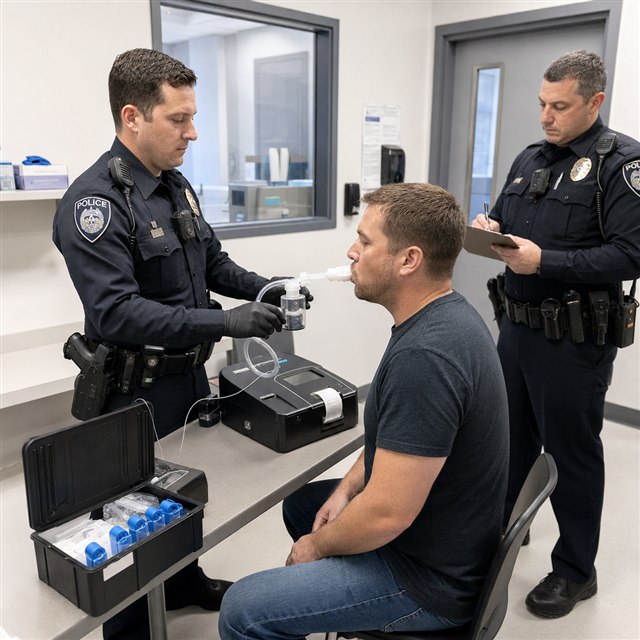
How Missouri proves DWI. Under § 577.010, RSMo, a person commits driving while intoxicated by operating a vehicle while in an "intoxicated condition" — under the influence of alcohol, a controlled substance, or drugs, or a combination of them. The State does not have to prove a specific blood alcohol content to convict; impairment alone is enough. Separately, a driver with a blood alcohol content of .08 percent or more is subject to license suspension or revocation on that basis alone under § 302.505, RSMo, regardless of whether the driving itself looked impaired. In practice, most DWI stops involve both theories at once.
Two cases, two tracks. The criminal case is handled by the prosecuting attorney in the county where the stop occurred, uses the "beyond a reasonable doubt" standard, and can result in a fine, jail time, probation, and a criminal record. The administrative case is handled entirely separately by the Department of Revenue and can suspend or revoke your driving privilege regardless of how the criminal case turns out — a dismissed criminal charge does not automatically restore your license. The one piece of good news: if both a criminal conviction and an administrative action result in a suspension or revocation for the same incident, Missouri law does not make you serve two consecutive suspensions — you serve the one period that applies.
First-offense penalties. A first DWI is a class B misdemeanor, punishable by up to six months in the county jail and a fine of up to $1,000. Missouri law restricts eligibility for a suspended imposition of sentence on a first offense: a court must place the person on probation for a minimum of two years, and if the case involved a blood alcohol content of .15 percent or higher, the person generally must successfully complete a DWI court, docket, or other court-ordered treatment program to qualify. If a court denies probation and imposes jail time on a first offense, Missouri law sets a mandatory minimum term tied to blood alcohol content — at least 48 hours for a BAC between .15 and .20 percent, or at least five days above .20 percent. On the administrative side, a first-time offense (with no alcohol-related enforcement contact in the preceding five years) results in a 30-day license suspension, followed by a 60-day period of restricted driving privilege limited to purposes like work and school — though a person who installs a certified ignition interlock device can avoid the 30-day suspension entirely and move directly to a 90-day restricted-driving period instead.
Repeat offenses escalate quickly. A single prior DWI-related offense within the preceding five years — or having a person under seventeen in the vehicle, even on an otherwise first offense — already raises the charge to a class A misdemeanor, punishable by up to one year in jail and a fine of up to $2,000. Beyond that, Missouri classifies repeat offenders based on the number of prior DWI-related convictions or findings of guilt — including a prior suspended imposition of sentence, which still counts even though it never became a public conviction. Unlike the five-year window that applies to a single prior offense, there is no time limit on how old a prior offense can be once a second or later offense is charged — a decades-old DWI still counts toward these felony thresholds:
- Persistent offender — two or more prior offenses, or a single prior offense that involved injury or death — a class E felony, punishable by up to four years in prison and fines of up to $10,000.
- Aggravated offender — three or more prior offenses, or two or more prior offenses where at least one involved injury or death — a class D felony, punishable by up to seven years in the custody of the Department of Corrections.
- Chronic offender — four or more prior offenses; three or more prior offenses if at least one involved injury or death; or two or more prior offenses if both involved injury or death — a class C felony (3 to 10 years), with no eligibility for parole or probation until at least two years have been served.
- Habitual offender — five or more prior offenses — a class B felony, punishable by 5 to 15 years in prison.
What happens if you refuse the breath test? Missouri's implied consent law, § 577.041, RSMo, provides that refusing a requested breath, blood, or urine test after a lawful DWI arrest results in an immediate revocation of your driving privilege, and under § 302.574, RSMo, that revocation runs for one year — separate from, and in addition to, any criminal case. If you ask to speak with an attorney before deciding whether to test, the officer must give you twenty minutes to try to reach one; if you still haven't submitted to testing when that period ends, it is treated as a refusal. Refusing the test does not prevent you from being arrested and criminally charged with DWI based on other evidence of impairment — it only removes the breath test result from the case while triggering its own separate, and often longer, license consequence.
Getting your license back. Reinstatement depends on which type of suspension or revocation applies to you, so the first step is always to obtain your driving record to confirm which one you're dealing with. Common requirements include completing the 30-day suspension and 60-day restricted-driving period (with an ignition interlock device required if you have a prior administrative suspension), maintaining SR-22 insurance for two years, completing the Substance Abuse Traffic Offender Program (SATOP), and paying a reinstatement fee to the Department of Revenue. A one-year revocation — whether from a second alcohol-related offense or a test refusal — generally requires the same SATOP and SR-22 steps before reinstatement, and a hardship driving privilege may be available during that year to allow driving to and from work. Multiple prior offenses can lead to a five- or even ten-year denial of driving privileges, which requires a court petition and a judge's approval before the Department of Revenue will reinstate a license.
Summary. A Missouri DWI stop almost always produces two separate proceedings — a criminal case that can result in a fine, jail time, or a felony record depending on your prior history, and an administrative license action that runs on its own timeline regardless of the outcome in court. Refusing a breath test carries its own automatic one-year revocation. Because the administrative deadline to request a hearing is short and the criminal case moves on its own schedule, getting an attorney involved early affects options in both proceedings, not just one.
Did you know? The above information is presented by Williams | Robinson | Wiggins as a public service and to generally outline the law in a particular area. It is not provided and is not intended as legal advice tailored to you or to your unique situation. Every legal matter depends upon specific facts which an attorney hired by you must consider in forming legal opinions and advice.
Need more information? If you have been arrested or charged with DWI in Missouri, you may contact us at(573) 341-2266 to obtain more detailed assistance.

Lance B Thurman
A shareholder with Williams | Robinson | Wiggins, Lance worked as an assistant Phelps County prosecutor before joining the firm, has served as an adjunct professor of criminal justice, and has spoken on DWI defense issues for the Missouri Association of Criminal Defense Attorneys.