Williams | Robinson | Wiggins
insights - all things legal
Who Pays After an Accident? Missouri's Fault Rules.
How fault, insurance, and damages work in Missouri injury claims.
An injury caused by someone else's carelessness is governed in Missouri by ordinary negligence principles rather than any single specialized statute. Missouri follows a pure comparative fault rule, requires drivers to carry minimum liability insurance, and gives an injured person up to five years to file suit in most cases excluding medical malpractice and wrongful death cases. Here is how a personal injury claim generally works under Missouri law.
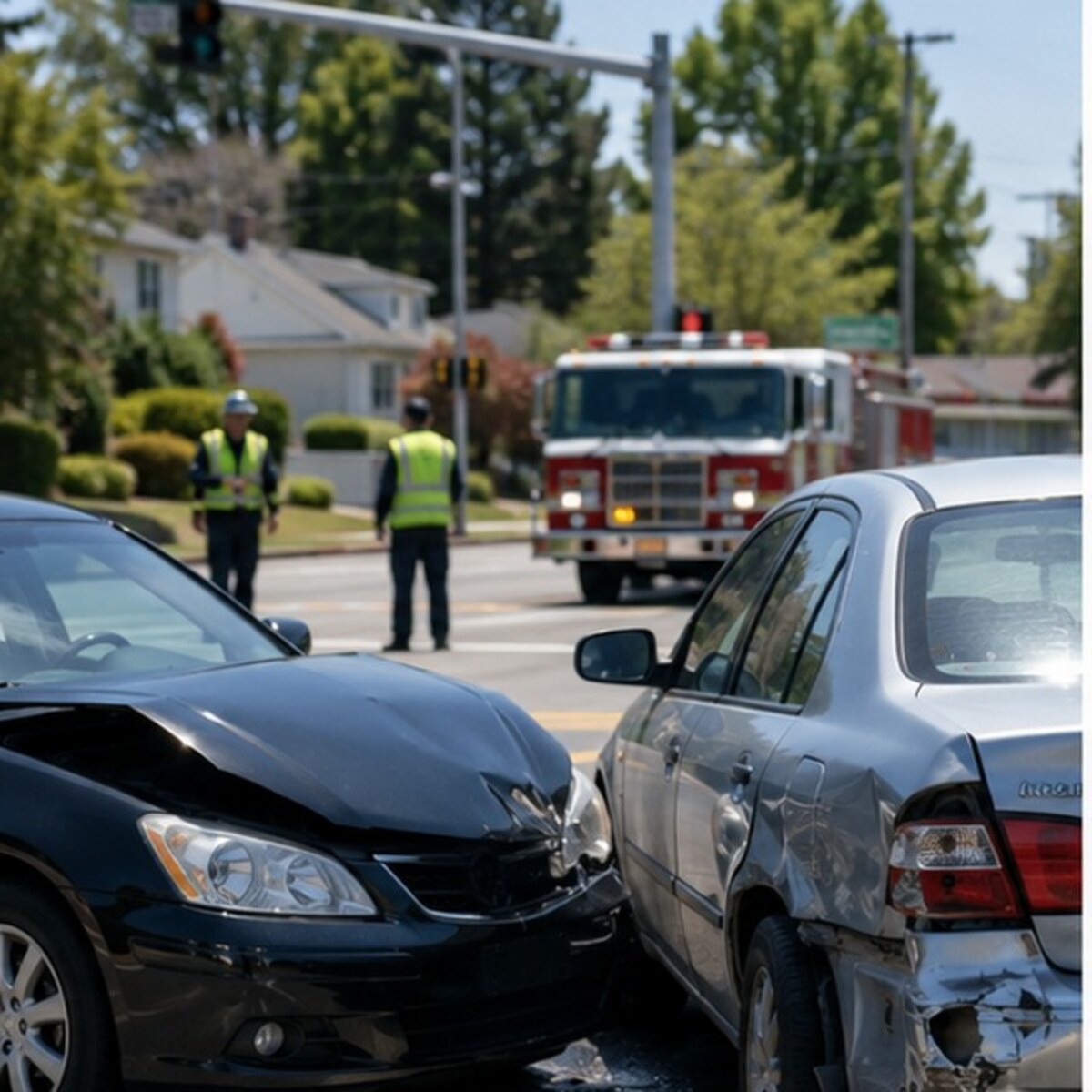
Missouri follows a pure comparative fault rule. Since the Missouri Supreme Court's decision in Gustafson v. Benda, 661 S.W.2d 11 (Mo. banc 1983), Missouri has followed "pure" comparative fault rather than the contributory negligence rule that once barred recovery entirely in some cases. Under pure comparative fault, if a jury finds a plaintiff partly at fault for causing an accident, the plaintiff's damages are reduced by that percentage of fault — but the plaintiff can still recover even if they are found to be more than half at fault. A plaintiff awarded $100,000 in damages but found 30% at fault, for example, recovers $70,000. This is a meaningfully more forgiving rule than the laws of many other states. The Missouri Supreme Court was explicit about the sweep of the change:
Because we supplant the doctrines of contributory negligence, last clear chance, and humanitarian negligence with a comprehensive system of comparative fault, this cause must be, and is, reversed and remanded for a new trial based upon a determination of the comparative fault of the parties.
Drivers must carry minimum liability insurance, and the at-fault driver's insurer pays first. Missouri is a "fault," or tort, state for automobile insurance, not a no-fault state — the driver responsible for causing the accident, and that driver's insurer, are responsible for the resulting damages. Under § 303.190, RSMo, Missouri drivers must carry liability insurance of at least $25,000 per person and $50,000 per accident for bodily injury, and $25,000 for property damage — commonly called 25/50/25 coverage. Missouri policies must also include uninsured motorist coverage in those same bodily injury amounts, to protect a policyholder injured by a driver who carries no insurance at all; under § 379.203, RSMo, this coverage cannot be rejected, even in writing. Other coverages, such as underinsured motorist coverage, which applies when the at-fault driver's policy limits are too low to cover the loss, or medical payments coverage, which is a no-fault coverage paying medical bills incurred in a collision, are strictly optional and must be specifically selected and an extra premium paid.
The filing deadline is five years for most personal injury claims — longer than in many other states. Under § 516.120, RSMo, an action for "any other injury to the person" generally must be filed within five years of the date of the injury. That is notably longer than the two-year deadline that applies to medical malpractice claims (§ 516.105, RSMo), or the shorter deadlines used in many other states for ordinary negligence claims. A different, shorter three-year deadline applies to wrongful death claims under § 537.100, RSMo, so the type of claim matters to which deadline controls.
Compensatory damages are not subject to any damages cap. Unlike a medical malpractice claim, an ordinary Missouri personal injury claim — including most auto accident and premises liability cases — is not subject to a statutory cap on noneconomic damages such as pain and suffering. A plaintiff may generally recover economic damages (medical expenses, lost wages, and property damage) and noneconomic damages without a cap tied to the type of claim. Compensatory damages must be proven by a "preponderance of the evidence," meaning more likely true than not — even a 51%-to-49% likelihood is enough. Under § 537.068, RSMo, the trial court may reduce or increase the size of a jury award of damages if the court determines the jury award is excessive or inadequate. Compensatory damages received on account of physical injuries or physical sickness, under current IRS guidance and interpretation, are non-taxable (26 U.S.C. § 104(a)(2)), while other types of damages may be considered taxable.
A separate statutory cap does apply to punitive damages, which under § 510.265, RSMo, are generally limited to the greater of $500,000 or five times the net amount of the judgment — although the Missouri Supreme Court has held that this cap cannot constitutionally be applied to common-law claims, including ordinary negligence claims. Lewellen v. Franklin, 441 S.W.3d 136, 144–45 (Mo. banc 2014). Punitive damages are intended to punish the at-fault party for outrageous misconduct, and the burden to pay for such conduct cannot be shifted to an insurance company. A claim for punitive damages also may not be included in the initial petition; the court's permission, based on supporting evidence, is required to add one later (§ 510.261.5, RSMo). Under § 510.261, RSMo, punitive damages are awarded for conduct showing that the defendant intentionally harmed the plaintiff without just cause or acted with a deliberate and flagrant disregard for the safety of others. However, as of this writing, Chapter 10 of the Missouri Approved Civil Jury Instructions still uses the common law standard for the jury instructions under which punitive damages are awarded for outrageous misconduct, which is defined as evil motive (MAI 10.01) or reckless indifference to the safety of others (MAI 10.02). As of the 2025 Comments to MAI 10.01 and 10.02, the Missouri Supreme Court Committee on Civil Jury Instructions still uses the 2008 adoption version of both Instructions. Unlike compensatory damages, punitive damages (also called exemplary damages) must be proven by "clear and convincing evidence," a heightened standard sitting between the ordinary civil "preponderance" standard and the criminal "beyond a reasonable doubt" standard.
Punitive damage awards are first reduced by attorney's fees and case expenses. Thereafter, 50% of the remaining recovery is paid to the Missouri Tort Victims' Compensation Fund under § 537.675, RSMo. The remainder is paid to the plaintiff and is taxable income. By way of example, this means that a $100,000 punitive damage award might be reduced by 40% to pay the attorney's fees and expenses; of the remaining $60,000, 50% goes to the Tort Victims' Compensation Fund; and the plaintiff will have to pay federal and state income tax on the remaining $30,000 – reducing the net post-tax recovery by the plaintiff to roughly 20% of the gross award. For all these reasons, punitive damages are not commonly pursued in ordinary injury claims.
Common types of claims beyond auto accidents. While automobile collisions are the most common personal injury claim, the same negligence framework covers falls caused by a hazardous condition on someone else's property (premises liability), injuries caused by a defective product, and injuries caused by a business's or individual's careless conduct more generally. Each type of claim shares the same basic elements — a legal duty, a breach of that duty, causation, and damages — but the specific facts that establish breach and causation look different in each context.
What to do after an accident. Reporting the incident promptly, seeking medical treatment even for injuries that seem minor at first, and preserving evidence — photographs, witness contact information, and the other driver's insurance information — all matter before memories fade and evidence disappears. Because an insurance adjuster's first offer is calculated to close a claim quickly and often does not reflect the full extent of long-term or delayed injuries, it is worth talking to an attorney before accepting a settlement or giving a recorded statement to an insurance company.
Did you know? The above information is presented by Williams | Robinson | Wiggins as a public service and to generally outline the law in a particular area. It is not provided and is not intended as legal advice tailored to you or to your unique situation. Every legal matter depends upon specific facts which an attorney hired by you must consider in forming legal opinions and advice.
Need more information? If you have been injured in an automobile accident or another incident caused by someone else's carelessness, you may contact us at(573) 341-2266 to obtain more detailed assistance.

Joseph W Rigler (J Kent Robinson, editor)
Of Counsel with Williams | Robinson | Wiggins, Joe's civil litigation practice includes representing clients in automobile collisions, premises liability, medical neglect, and products liability matters.