Williams | Robinson | Wiggins
insights - all things legal
Federal gun regulation in 2026: what just changed — and what hasn't?
Two courtrooms, a settlement, and a new playbook — the trend toward remaking federal firearms law
On August 13, 2026, the Attorney General signed a rule reviving a process — dormant since 1992 — by which Americans barred from possessing firearms may ask the federal government to restore that right; the Department announced it on August 17. That same August 17, a federal judge in Fort Worth held ATF's "ghost gun" rule unconstitutional — a regulation the Supreme Court had upheld against a different attack just seventeen months earlier. Twelve days earlier, another Texas court had held the National Firearms Act's registration scheme unconstitutional as applied to suppressors and short-barreled firearms — a party-limited ruling we cover in detail in a companion article. These are not isolated events. Together with the 2025 settlement that ended the government's fight over "forced reset triggers" and the executive order that set the whole review in motion, they trace the most consequential realignment of federal firearms regulation in a generation. Keep reading for what changed, what did not, and what it means in Missouri.
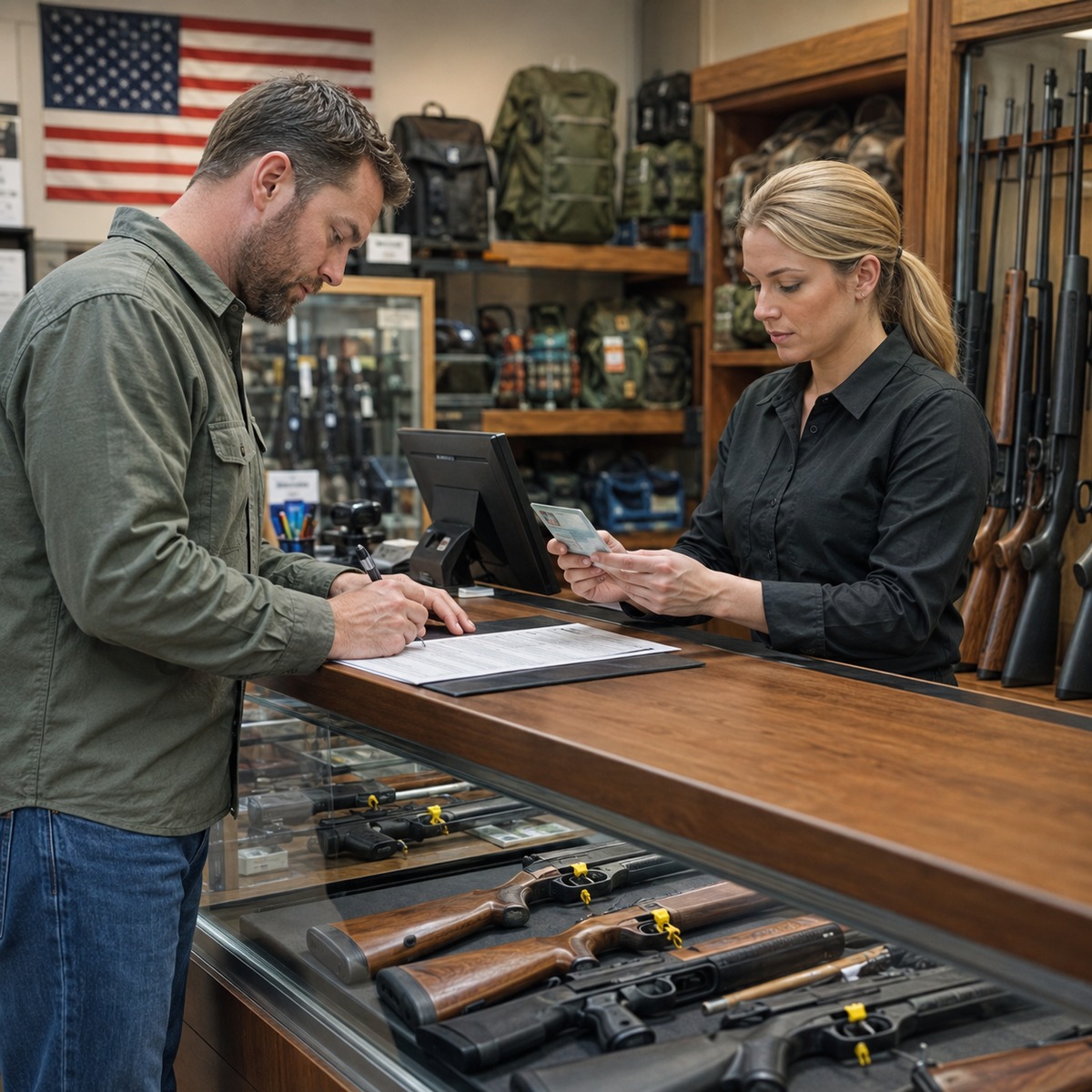
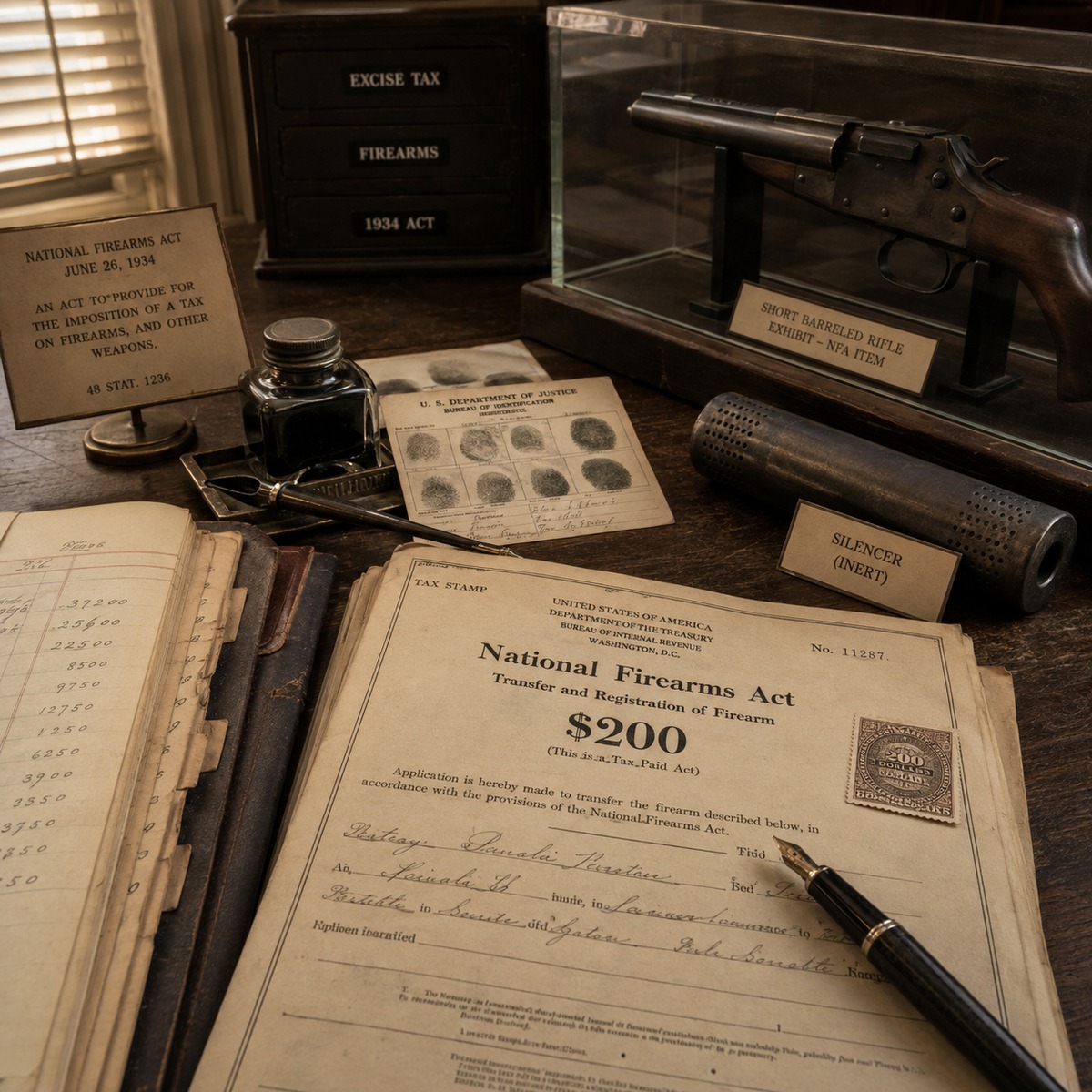
Two components under one label. "Federal firearm regulation" is really made up of two very different components. The Gun Control Act of 1968 (the "GCA") governs who may deal in and possess firearms: dealer licensing, background checks, and the prohibited-person categories of 18 U.S.C. § 922(g). The National Firearms Act of 1934 (the "NFA"), together with ATF's classification practice, governs what firearms are regulated under the NFA and which are regulated under the GCA: which devices are specially taxed and registered — machine guns, suppressors, short-barreled rifles and shotguns — and, just as importantly, which objects count as regulated items in the first place. For decades, ATF answered those "what" questions by regulation and classification letter: this trigger is a machine gun; this piece of aluminum is a receiver. What follows is the story of the second component seeming to be partially dismantled, on a narrow and limited basis, by all three branches of government at once — while the first component, the GCA, is deliberately preserved, and even reinforced.
The classification wars. The unraveling began with bump stocks. After the 2017 Las Vegas shooting, ATF reversed its own precedent and classified bump stocks as "machineguns" under 26 U.S.C. § 5845(b). In Garland v. Cargill, 602 U.S. 406 (2024), the Supreme Court held that the statute means what it says — a bump stock does not fire more than one shot "by a single function of the trigger" — and the classification fell. ATF's 2023 pistol-brace rule met a similar fate: the Fifth Circuit found it likely unlawful, Mock v. Garland, 75 F.4th 563 (5th Cir. 2023), the district court vacated it in June 2024, and the government later abandoned its appeal. The hardest-fought front was "forced reset triggers" — drop-in triggers that let a semiautomatic rifle be fired very rapidly, one round per pull. ATF classified FRTs as machine guns in 2021 and 2022, seized inventories, and sued the leading manufacturer, Rare Breed Triggers, in federal court in Brooklyn, where the government won a preliminary injunction in 2023. United States v. Rare Breed Triggers, LLC, 690 F. Supp. 3d 51 (E.D.N.Y. 2023). But that ruling was followed by a very different finding in National Association for Gun Rights v. Garland, 741 F. Supp. 3d 568 (N.D. Tex. 2024), where the same judge who would later decide the ghost-gun case applied Cargill and held that FRTs are not machine guns, vacating ATF's classification. By the end of 2024, the classification component of the NFA was losing nearly everywhere it was being tested.
A word about geography. None of these fights unfolded in randomly assorted courthouses. Cargill began in the Western District of Texas; the pistol-brace, forced-reset-trigger, NFA-registration, and ghost-gun cases were all filed in the Northern District of Texas — three of them before the same judge in Fort Worth. Plaintiffs choose where to sue, and challengers of federal firearms regulation have consistently chosen Texas district courts within the Fifth Circuit. What emerges from those courtrooms are, formally, rulings of individual district judges that bind only the parties before them; yet they are increasingly discussed — and relied upon — as though they measured federal firearms law nationwide. Readers can draw their own conclusions about that pattern; the geography, at least, is a fact.
The executive turn. Less than three weeks into the new administration, Executive Order 14206, Protecting Second Amendment Rights, 90 Fed. Reg. 9503 (Feb. 7, 2025), directed the Attorney General to review every federal action that may burden Second Amendment rights and to propose a plan to address them. What followed was less a plan than a series of stand-downs in the classification wars. The Attorney General's new Second Amendment Task Force reviewed the forced-reset-trigger cases and concluded — in the words of the settlement it produced — that continuing them was "not in the public interest." On May 16, 2025, the Department of Justice settled the entire forced-reset-trigger portfolio: the government dismissed its Brooklyn enforcement action with prejudice along with its Fifth Circuit appeal of the NAGR ruling, the parties jointly dismissed a companion forfeiture case in Utah, the government agreed to return seized and surrendered triggers (owners' return requests were due by September 30, 2025), and — most striking — the United States committed not to enforce the federal machine-gun laws against anyone possessing or transferring FRTs that operate as the NAGR court described and are not used in handguns. Rare Breed, for its part, agreed not to develop forced reset triggers for handguns and to enforce its patents; the Department's announcement framed those agreed conditions as advancing public safety.
It is noteworthy that while the Department committed not to enforce the forced-reset-trigger proscriptions provided the trigger is not in a handgun, and while Rare Breed committed not to develop any FRT products for handguns, a number of companies are now selling FRTs for handguns. ATF and the Department appear not to be enforcing against them because handgun FRTs have been left in legal limbo: the government will not officially state whether they are or are not illegal, leaving federal agents and prosecutors without clear guidance. State law is another matter entirely — forced reset triggers of any configuration remain unlawful under the laws of California, Colorado, Connecticut, Hawaii, Illinois, Maryland, Massachusetts, New Jersey, New York, Oregon, Rhode Island, and Washington, and in the District of Columbia.
The retreat did not stop with triggers. Two months later, the government dismissed its own appeal in the pistol-brace case, cementing that rule's vacatur. And when the NFA registration scheme was enjoined in August 2026, the government sought no emergency relief — it let the injunction take effect. Whether the Department of Justice will appeal the ruling remains to be seen.
A line drawn — then erased. The retreat was not total. In April 2026, the Department completed its review of ATF's 2022 frame-and-receiver rule — the "ghost gun" rule — and elected to keep it, and government lawyers defended the rule in court to final judgment. The administration's line seemed clear enough: classification rules governing accessories for finished firearms fell, while the rule aimed at untraceable, home-assembled guns stayed. Four months later, a federal court erased that line.
The ghost-gun rule falls — for its challengers. In April 2022, ATF had redefined "frame or receiver" for the first time since 1978, extending the GCA's reach to partially complete frames and receivers and to weapon parts kits. 27 C.F.R. § 478.11; 27 C.F.R. § 478.12(c); 87 Fed. Reg. 24,652 (Apr. 26, 2022). The Fifth Circuit struck the rule down as beyond the statute, but the Supreme Court reversed in Bondi v. VanDerStok, 604 U.S. 458 (2025), holding that the GCA's text permits ATF to regulate at least some partially complete frames and some weapon parts kits. That decision resolved only the facial statutory question — the constitutional challenges remained open. On remand, two intervening plaintiffs — Defense Distributed, a Texas seller of gunsmithing equipment and unfinished frames, and the Second Amendment Foundation — pressed exactly those challenges. On August 17, 2026, in Defense Distributed v. Blanche, No. 4:22-cv-00691-O (N.D. Tex. Aug. 17, 2026), Judge Reed O'Connor held the rule unconstitutional twice over. First, it is void for vagueness: the rule decides when an unfinished object becomes a regulated "frame or receiver" through a nonexclusive eight-factor test of how "readily" the object can be completed — a test the court found gives no one fair notice of where federal criminal exposure begins:
The decision of when a hunk of metal or plastic "may readily be completed, assembled, restored, or otherwise converted to function as a frame or receiver" is left to the subjective determination of the ATF and does not provide fair notice to the reader about when a component becomes subject to enforcement.
Second, the rule violates the Second Amendment. Under New York State Rifle & Pistol Association v. Bruen, 597 U.S. 1 (2022), and United States v. Rahimi, 602 U.S. 680 (2024), a regulation of conduct the Second Amendment covers must be consistent with the Nation's historical tradition of firearm regulation. The government offered colonial barrel-proving and gunpowder-storage laws as historical analogues; the court found those were product-safety measures rather than crime-control measures — and that the actual American tradition runs the other way:
The Final Rule does not merely lack supporting analogues. It contradicts the actual historical tradition of personal gunsmithing. Self-manufacture of firearms in America was common and indeed foundational to establishing our Nation.
What the ruling does — and does not — do. Notably, the rule survived every one of the plaintiffs' administrative-law claims: the court held that ATF adequately explained its change of position and that VanDerStok confirms Congress delegated the definitional authority ATF exercised. The rule fell on the Constitution alone. And the relief is deliberately narrow. The court declared the two provisions unenforceable against Defense Distributed, the Second Amendment Foundation, and SAF's current or future members, and the final judgment, entered the next day, August 18, enjoins enforcement only with respect to four specific Defense Distributed products. (Some news accounts date the ruling August 18; that is the judgment. The opinion's own file stamp reads August 17.) The rule was not vacated: it remains on the books and continues to bind everyone outside the protected class. The government's deadline to appeal runs to mid-October 2026. Fed. R. App. P. 4(a)(1)(B).
The same day, in Washington. Hours apart from the Fort Worth decision, the Attorney General announced a final rule — AG Order No. 7109-2026, signed August 13 — reviving relief under 18 U.S.C. § 925(c). Federal law has long promised that a person barred from possession of firearms may apply to the Attorney General for relief from that disability, but beginning in 1992 Congress barred the ATF by appropriations rider from spending anything to process applications, and the program went dark for a third of a century. The new rule moves the function to the Department's Office of the Pardon Attorney and adopts written criteria: presumptively permanent disqualification for the gravest categories — violent felonies, sex offenses against minors, terrorism offenses, and the like; presumptive waiting periods of ten or five years, by category, for most other convictions; and status bars for anyone still in prohibited circumstances. The rule states its aim plainly:
The criteria are designed to ensure that the fundamental right of the people to keep and bear arms is not unduly infringed, that those people granted relief are not likely to act in a manner dangerous to public safety, and that granting such relief would not be contrary to the public interest.
Two limits deserve emphasis. Relief is federal only: a grant restores federal eligibility but does not touch state law — in Missouri, unlawful possession of a firearm under § 571.070, RSMo, is a separate state offense that a federal grant does not erase. And the rule is only now becoming operative: it was published in the Federal Register on August 20, 2026, it takes effect September 21, 2026, and the Department has said it will begin accepting applications on that same schedule through its Federal Firearm Rights Restoration program.
The pattern. Put the pieces side by side and the design shows: the device-classification component of firearms regulation is being pared back from three directions at once — though each cut is narrow, and its limits belong in the same breath. Congress cut the NFA's making and transfer taxes to zero for suppressors, short-barreled rifles and shotguns, and "any other weapons" in the One Big Beautiful Bill Act, Pub. L. No. 119-21 — but the $200 taxes on machine guns and destructive devices remain, and the registration scheme itself stays fully enforceable against everyone a court has not protected. The courts have held the untaxed registration requirements unconstitutional as to the plaintiffs, members, customers, and states before them, Silencer Shop Foundation v. BATFE, No. 6:25-CV-056-H (N.D. Tex. Aug. 5, 2026), and the ghost-gun definitions unconstitutional as to Defense Distributed, SAF, and SAF's members — no further. And the executive settles, declines to appeal, or acquiesces. The who-may-possess component, by contrast, is being rebuilt to survive the same constitutional era: after Bruen and Rahimi, the firearm laws that endure are the ones with historical pedigree and individualized findings of dangerousness — and a lifetime prohibition with a working relief valve is far easier to defend than one without. The forced-reset-trigger settlement, the defense of the ghost-gun rule to final judgment, and the restoration rule are not contradictions. They are one government choosing which architecture it will defend.
What has not changed. For most gun owners, the everyday rules are exactly what they were. The GCA is fully intact: dealer licensing, background checks, transfer paperwork, and the prohibited-person categories still apply to every firearm. Machine guns and destructive devices remain fully NFA-regulated — their $200 tax still raises revenue — and the 1986 freeze on new civilian machine guns, 18 U.S.C. § 922(o), is untouched. The ghost-gun rule still binds everyone outside Defense Distributed, SAF, and SAF's members, so buying or selling unserialized frames or kits outside that protection carries the same federal exposure it did before the ruling. The NFA injunction likewise protects only the plaintiffs, their members and customers, and fifteen states — Missouri is not among them — and who is actually covered is detailed in our companion article. It bears repeating that none of these injunctions is nationwide.
State laws also operate on their own track: Missouri restricts particular weapons by statute, see § 571.020, RSMo, and more than a dozen states directly regulate unserialized, self-made firearms, several banning them outright. None of this is self-executing; anyone planning to rely on membership or customer status should keep proof of it.
It is impossible to predict how firearm regulation will settle out on a national level. Recall that most of these court decisions originate in Texas — perhaps reflecting an approach to firearms regulation that other federal courts may not share. And, lacking any ruling that applies nationwide and binds the states through the Supremacy Clause of the U.S. Constitution (Article VI, Clause 2), each state remains free to regulate many of these matters as it chooses — the state forced-reset-trigger prohibitions being a good example.
What to watch this fall. Three clocks are running. The government's windows to appeal expire in early October for the NFA case and mid-October for the ghost-gun case. If the Department lets them pass, both rulings become the settled — though party-limited — law of those cases, and an open invitation for identical suits by others; if it appeals, the Fifth Circuit, and perhaps ultimately the Supreme Court, will face the constitutional questions VanDerStok left open. The restoration rule was published in the Federal Register on August 20 and takes effect September 21, with the first applications expected this fall. And Congress holds a trump card in each direction: restoring even a nominal NFA tax would rebuild the registration scheme's constitutional footing overnight, while proposals to deregulate suppressors entirely would finish what the tax cut began. We will update this article as those dates arrive.
Did you know? The above information is presented by Williams | Robinson | Wiggins as a public service and to generally outline the law in a particular area. It is not provided and is not intended as legal advice tailored to you or to your unique situation. Every legal matter depends upon specific facts which an attorney hired by you must consider in forming legal opinions and advice.
Need more information? If these developments affect firearms you own, make, or plan to acquire, if you hold NFA items directly or through a gun trust, or if a past conviction bars you from possessing firearms and you want to understand the new federal restoration process, you may contact us at(573) 341-2266 to obtain more detailed assistance.

J Kent Robinson
Of counsel with Williams | Robinson | Wiggins, Kent has practiced law since 1979. He spends most of his time being retired and, in his free time, working on banking law and business transactions.
Contact

Joseph W Rigler
Of Counsel with Williams | Robinson | Wiggins, Joe's civil litigation practice includes representing clients in automobile collisions, premises liability, medical neglect, and products liability matters.